

The Vulnerability Trap: Did a 2010 TED Talk Teach Millennial Women to Burnout?
For a generation of millennial women, vulnerability became a leadership script. Many of us didn’t realize the cost until years later.

I’ve burned out at every single job I’ve ever had. Including the company I owned.My burnout was a product of an identity crisis and someone else’s framework of how to “be myself at work”
That framework came from a TED talk I watched at 17. And it took me until last year to finally see it clearly.
It Started With a Podcast
A few weeks ago, flying home from a work trip to LA, I listened to Brené Brown on The Interview from The New York Times. She was in conversation with one of my favorite journalists, Lulu Garcia-Navarro, discussing her new book: Strong Ground: The Lessons of Daring Leadership, the Tenacity of Paradox.
For years, I was a fan of Brené Brown. Her research felt necessary. It gave language to shame, to vulnerability, to the emotional terrain many of us had been navigating without vocabulary. But over time, my fandom has thinned out. Part of that shift is personal. As I’ve gotten older, I’ve developed a more complicated, sometimes skeptical lens toward a certain genre of Boomer women whose work once felt revolutionary and now feels…Distant. Not wrong, exactly. Just out of step with the moment we’re living in.
Still, I pressed play with an open mind. I wanted to hear what this next chapter sounded like, and almost immediately, something felt different. She didn’t sound like the researcher I once felt so connected to. Her tone carried a kind of unease. Not defensive, not hostile, but unsettled. As if she, too, was negotiating the weight of what her work has become in public life.
Somewhere between the hum of the plane and the gift of 6 uninterrupted hours, my brain started circling what that discomfort might mean, not just for her, but for us, the generation that absorbed her work at exactly the right, or wrong, moment.
If you’re my age, 34 a millennial who came of age online, you remember when her 2010 TED Talk on vulnerability exploded. It has more than 65 million views now, but back then it felt even bigger than that. It was everywhere. When it debuted, I was a senior in high school, deeply impressionable and hungry for a model of leadership that felt both powerful and humane. Her language felt adjacent to the kind of leader, and the kind of person, I wanted to become.
But listening to this new interview, I felt a dissonance I couldn’t ignore. So I paused it, switched tabs, and rewatched the TED Talk I hadn’t seen in years . And this time, I received Brené and her vulnerability work differently.
The message hadn’t changed. But I had.
Something clicked that hadn’t before…and not in a good way. A leadership philosophy widely celebrated as liberating may have unintentionally encouraged burnout for the generation of women who adopted it most earnestly.
The Early 20-Teens Felt Like a Revolution. For Better and Worse.
If you came of age professionally in the early 2010s, you remember the feeling. It felt like everything was being rebuilt in real time. This was before A.I., before the internet calcified into what it is now. Uber was dismantling taxis. Warby Parker proved you could build a profitable brand and a conscience at the same time, and every new CPG company claimed to have a mission that would “change the world.”
And in the middle of that optimism, the Girl Boss era emerged. Sheryl Sandberg told us to lean in, then Sophia Amoruso turned ambition into merch. It was a plethora of White women claiming space in matching pink sets, building brands while launching podcasts with gold foil script logos and calling it empowerment.
At the same time, there was Brené.
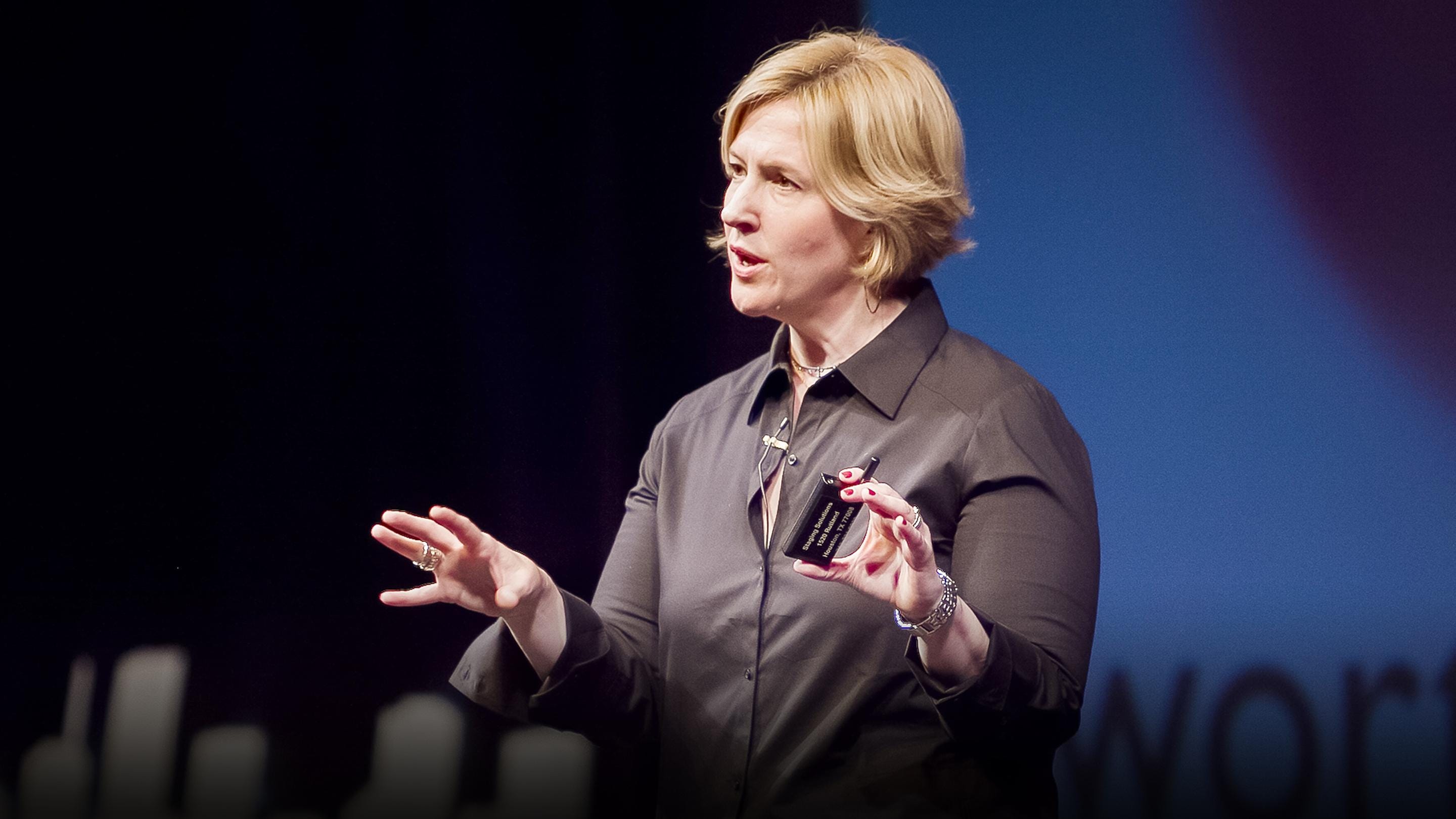
She wore oversized men’s shirts, barely any makeup, and didn’t seem particularly concerned with whether she was a size two. She felt like the antithesis of the glossy “Girl Boss / Lean In” aesthetic that dominated the moment. While startup culture rewarded speed, scale, and certainty, Brené spoke about vulnerability, authenticity, and bringing your whole self to work. Her message felt slower, almost corrective. Where one movement insisted you push harder, hers invited you to open wider, soften, and be yourself.
For millennial women like me trying to survive inside systems that were never built with us in mind, that invitation felt like relief. We were being asked to be ambitious but emotionally intelligent, tough but self-aware, decisive but nurturing. We were pushing against toxic masculinity before we even had language for it, exhausted by the suggestion that our only options were to harden or to hustle in heels.
I knew I did not want to be a girl boss. The posture felt exhausting and out of touch. But I also didn’t want to lead like the men I had already encountered, the ones who mistook intimidation for competence. So when Brené offered what felt like another way, leadership rooted in vulnerability and authenticity, I signed up. Many of us did. For women of color especially, it felt like permission to lead without contorting ourselves into something unrecognizable.
Looking back, I can now see how easily that turned into overcorrection.
Emotional Labor In Plain Sight
Long before Brené’s TED talk, sociologist Arlie Hochschild identified Emotional Labor in 1983 as the invisible, exhausting work of managing your own feelings to serve someone else’s emotional needs. Her research showed that this burden falls disproportionately on women, and that it is not a character flaw but a structural one, built into the way workplaces assign emotional caretaking along gender lines. A decade later, researchers studying compassion fatigue found that repeatedly absorbing other people’s emotional distress without any buffer leads directly to burnout, not as a metaphor but as a measurable physiological outcome. This research existed long before our generation entered the workforce. It just wasn’t part of the leadership language we were handed.
What we were handed instead was the message that vulnerability was courage, and that bringing your whole self to work was the antidote to the cold, ego-driven leadership we’d inherited. For millennial women who entered the workplace after 2014, this created a perfect storm. We were too young and too eager to understand that we could define our own way of showing up. So we chose the third lane; Brené’s lane. And the emotional labor research predicted exactly what happened next: when one person consistently absorbs the emotional weight of others without limits, the body keeps score, and in comes…Burnout.
Revenge of Daring Greatly?
Somewhere between rewatching the TED Talk and finishing the Interview episode with Brené and Lulu Garcia-Navarro, I understood that it wasn’t just the tone that unsettled me. It was one exchange I couldn’t stop replaying.
About a third of the way in, Lulu did something few interviewers have done with her in recent years. She challenged the premise. She said the empathy-centered leadership Brené had championed for over a decade “seems to have fallen out of the zeitgeist.” Then she pointed to the evidence: the most valuable companies in the world right now are not known for their humanity. Elon Musk walked into Twitter and fired more than half the staff in a single afternoon. Meta rolled back safeguards meant to protect people from hate speech and violence. Corporate America dismantled the DEI programs it had so publicly embraced during the 2010s. And it did so without consequence. Beneath her observation was a harder and uncomfortable question: did this model of vulnerability in leadership ever actually work?
A few year ago, Writer Rafia Zakaria wrote a piece on Brene’s theories, breaking down how it actually fails the most vulnerable in its attempts to promote vulnerability. She argues that Brené’s framework assumes vulnerability is a choice, which is itself a privilege-dependent position. Brené’s model centers the self first and extends empathy outward from there, reflecting her own social location. That observation clarifies why the framework, if translated differently across hierarchies only works for those who already possessed institutional authority and psychological safety. For women trying to establish credibility, and particularly for women of color navigating systems that questioned their legitimacy from the start, the cost was exponentially higher.
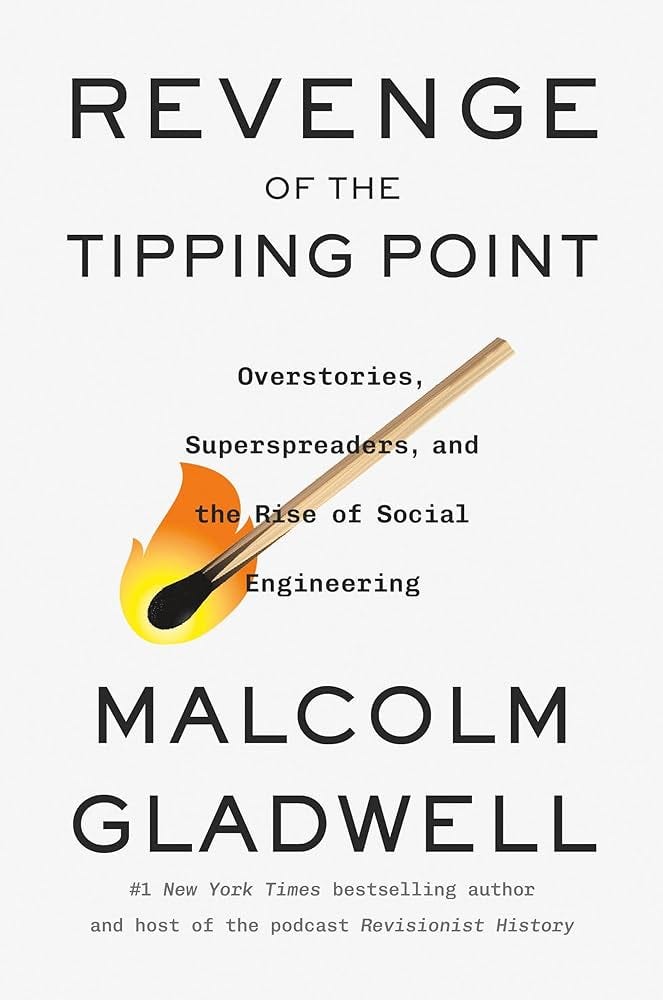
What I also keep coming back to is Malcolm Gladwell’s Revenge of the Tipping Point, published in 2024, where he revisits the very ideas that made him famous and interrogates what happened after they took on a life of their own. It is an act of intellectual honesty that requires sitting with the uncomfortable reality that ideas, once released into the world, do not always behave the way their authors intended. Gladwell, bravely, acknowledges in this work that the same framework that illuminates can also obscure and that perhaps in some ways, he was wrong.
Now, I am not suggesting Brené Brown needs to write a revenge edition of Daring Greatly. But I am suggesting that millennial women who built their leadership identities around her work, and who professionally burned out over and over again, could benefit from the same level of honest reexamination from the person who helped shape how we understood ourselves professionally.
Because many of us have turned a corner. We can now see that the line was not in “showing up as your full self,” but in being kind, compassionate and boundaried. And frankly, that radical vulnerability inside hierarchical workplaces was an enormous mistake, albeit an important life lesson.
Clarity Over Vulnerability
What frustrates me most is that this conversation, the real one, about impact and unintended consequences, hasn’t happened in any meaningful way between Brené Brown and the millennial women whose lives were shaped by her work.
I do not believe Brené Brown is responsible for the burnout that defined my twenties. I have written at length that burnout is often rooted in identity confusion, and that part belongs to me. This is not about canceling her or collapsing 15 years of important research into a single critique. It is about understanding why so many millennial women took her work on vulnerability, turned it into a blueprint for burnout, and why that specific consequence has never been adequately examined, including by Brené herself.
In my thirties, I no longer practice vulnerability at work the way I once did, and I have not burned out in years. I reserve, my vulnerability for my intimate relationships and families. It is transformative. I have learned that at work, being kind does not require being boundaryless, and being authentic does not require unlimited emotional availability. The distinction between personal and professional is not complicated. It simply wasn’t articulated clearly enough when we needed it.
What I am asking for is simple, for the same intellectual courage that made vulnerability a global language to be examined in its aftermath. When an idea reshapes a generation of working women, it is worth looking at how it behaved once it entered corporate hierarchies that were never designed to hold it safely. That evaluation would not diminish the work, it would mature it.
And for the women who have not yet drawn this line for themselves, who still believe that emotional exposure is the price of being perceived as evolved or good or different from the men who came before us..I promise you there is another way to lead.
You may be overextending in ways that feel virtuous but quietly deplete you. You can be clear without being cold, you can be authentic without offering unlimited access to your interior life.
Vulnerability has its place. But at work, especially inside power structures, being kind is more than enough.